
Building Mission-Driven Campaigns for Youth: Strategies for Engaging Children and Teenagers

Talking with kids about big issues like climate change or community advocacy is a balancing act. Push too hard and you get eco-anxiety. Play it too safe and the message doesn’t resonate. So how do the people who work with kids every day actually make it work?
We hosted one of our virtual roundtable series, "Building Mission-Driven Campaigns for Youth: Strategies for Engaging Children and Teenagers," to find out. Our panel of youth engagement experts shared what actually gets kids and teens to move from watching to doing.
The session was led by a group of experienced youth educators and communicators:
- Dani Vachon and The Beacon Design Collective help purpose-driven organizations build trust and amplify their impact through strategic design, branding, motion graphics, and communications materials, including for children and youth.
- Amanda Razo and the Otipemisiwak Métis Government build meaningful youth engagement through experiential, culturally grounded communications and engagement for Métis children and families.
- Monica Cheema and the team at CityHive design culturally responsive, multimodal programs that meet young people where they are and empower them to shape the systems around them.
- Jacob Rodenburg and Camp Kawartha bring decades of outdoor education experience, using hands-on, nature-based learning to connect kids to the world around them.
Here's a detailed breakdown of the key strategic takeaways from our conversation.
Give kids a problem they can actually solve
Jacob opened with a rule he holds firm to: don't hand a kid a problem they didn’t create and don't have the tools to act on. That's not about protecting kids from hard truths—it's about sequencing. Agency has to come before awareness, or awareness just turns into helplessness. Once a child feels connected to something bigger than themselves, they feel less alone, and that shift from isolation to belonging is what turns a single good deed into a repeatable habit.
But a habit only sticks if a kid can see proof it's working, and that's why the choice of activity matters as much as the message itself. To illustrate, Jacob provided the following example:
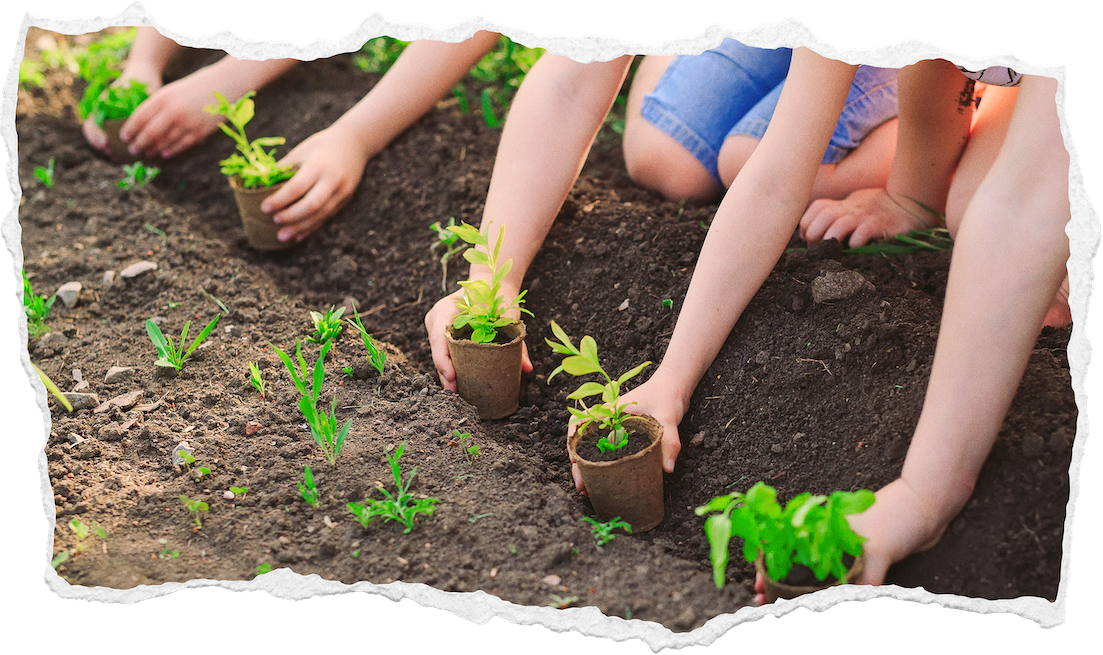
- Gardens and tree planting work because the feedback loop is immediate. A kid can put a seedling in the ground and, within the same afternoon, point to it and say, "I did that."
- Cleanup work, by contrast, doesn't have the same effect. There's always more mess to clean, the mess usually wasn't the kid's to begin with, and the sense of progress is harder to see.
He described the difference in physical terms too: there's an energy in putting your fingers in the earth and generating something that a trash pickup just doesn't replicate.
Celebrating wins matters just as much as the activity itself. At Camp Kawartha, that shows up as shout-outs in a regular newsletter and short articles documenting what kids have done. It's a small operational choice, but it does real psychological work: kids need an external, shareable record of their accomplishments before that accomplishment can become part of how they see themselves. Without that documentation step, the wins happen but then evaporate.
If your youth programming starts with a systemic issue and works down to an action, you're building the habit backwards. Start with a contained, visible action, and let the bigger understanding follow the success.
Make regeneration something kids can walk into
Jacob also walked through how Camp Kawartha turned its own buildings into a teaching tool, and it started with a language correction. He pushed back on the word "sustainable" because it implies a steady state: just holding the line. He prefers "regenerative," which implies actively putting more back than you take.
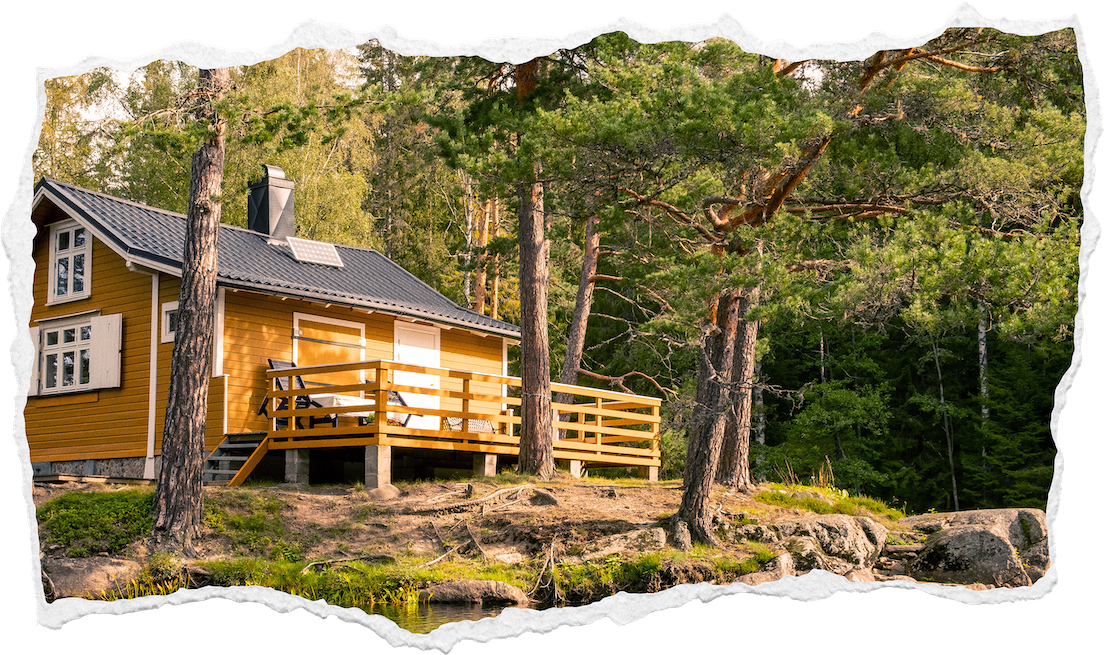
That distinction shows up in the construction numbers. A typical building might emit 40 to 50 tonnes of carbon during construction. Camp Kawartha's buildings absorb five tonnes instead, because every material was chosen for what happens at the end of its life, not just during construction. When the building's useful life is over, the materials are non-toxic enough to simply become part of the earth again. The result is a site with more nature in and around it than existed before the buildings went up.
For kids, walking through a space built this way does more teaching than a curriculum ever could. Jacob said visitors regularly tell him some version of, "I didn't know you could live like that. I'd like to live like that." He described the goal as making sure kids can be nourished by "vitamin N", so from the living systems right outside the door, rather than experiencing nature as something separate from where they eat, sleep, and learn.
Rather than just a sustainability tactic, this is a design principle any service organization can use. The physical spaces and program environments you build are already teaching a lesson, whether you've designed for it or not. A financial literacy nonprofit's office that feels transparent and easy to navigate teaches trust before a single workshop starts. A mental health program's waiting room that feels calm and unhurried teaches regulation before a counsellor says a word. Whatever abstract value your organization is trying to convey, the built environment is one of the most underused tools available to make the value real—people absorb what a space models long before they absorb what a hand-out says.

Set the frame, then let kids run with it
When it comes to co-creating programs with kids and teens, Monica's position was direct: structure is what unlocks creativity, not what limits it. Knowing the boundaries of a project—i.e. the scale of a "dream city" exercise, or the shape of a committee program, decided together as a group before anyone starts generating ideas—gives kids something concrete to push against. In practice, Monica said this happens as a group exercise upfront: the room decides together what the parameters of a project are—are we tackling our school, our neighborhood, or something bigger?—before anyone starts generating ideas. That single step of deciding the scale together is itself a skill worth practising, and not just a logistical formality.
Amanda echoed this from her own experience consulting with kids directly. Her team consistently sees the same pattern: kids bring huge, energetic, ambitious ideas, but they're not always systemic thinkers yet, so those ideas can be hard to execute as stated. The job isn't to shut the idea down. Amanda described it as asking gentle, critical-thinking questions, such as "have you thought about this?" or "what about that?", to help a child adjust their own vision into something actionable, while leaving the creative spark that produced the idea fully intact.
Co-creation fails most often not because kids lack ideas, but because facilitators either give too much freedom (resulting in overwhelm) or too little (resulting in compliance instead of ownership). Setting the frame first, then asking questions rather than issuing corrections, is what keeps both creativity and structure in the room.
Turn passive learners into active advocates
The question the whole panel weighed in on was, "What actually turns a kid who's learned something into a kid who acts on it?" This resulted in three answers and three different mechanisms.
- Jacob: speed and containment. A project has to be small enough to finish and see results within days or weeks, not months or years. This is the same reasoning behind his garden-over-cleanup preference, but applied more broadly—kids want to show they're capable of something positive, and a long timeline undercuts that before it starts. The size of a problem is what breeds apathy; a small, completable piece of it is what breeds confidence.
- Amanda: consistency and belonging. A one-time event might get initial interest, but it's repeated engagement that builds real investment. Over time, kids connect with peers and with elders, and that relational layer is what makes them want to come back—not necessarily the content of the program itself. Amanda added that celebrating and honouring wins publicly is just as important as showing up consistently: kids need to see that their effort was noticed and that someone is proud of it, which is what eventually makes them comfortable enough to advocate publicly themselves.
- Monica: hyper-local grounding. Instead of opening with a global issue like climate change, Monica starts in the classroom and walks students through their own school grounds, asking what isn't working in the place they spend eight hours a day. Fixing an inaccessible bike ramp becomes a concrete, ownable project, and, as she pointed out, addressing it means a student has just participated in a form of disability justice, not an abstract lesson about it. The hyper-local lens works because kids already have a relationship with their immediate environment; the facilitator's job is just to help them see the leverage they already have in it.
- Dani: normalizing failure. Instead of pitching failure as an abstract lesson in resilience, host an intergenerational roundtable where adults and kids share concrete stories of falling short and rebounding. Hearing adults normalize their own missteps strips the threat from making mistakes and proves that failure is just an intermediate step in building a better version of oneself. The format works because it lowers the social stakes in real time; seeing their own experience reflected across generations gives kids the psychological safety they need to take risks, pitch raw ideas, and present with confidence.
These four levers—speed, consistency, proximity, and comfort with risk—are stackable. A hyper-local project that delivers a quick, visible win, gets celebrated and revisited, and provides the psychological safety to take risks is a program built to convert learners into advocates on all four fronts at once, not just one.
The throughline: Start where kids already are
To recap, here are a few practical starting points for organizations building or refreshing a youth program:
- Co-create projects. Lead with something a child can complete and point to, and let the bigger understanding follow the success.
- Let your physical spaces teach. If your program has a facility, office, or event space, treat it as a design opportunity, not just a backdrop.
- Set the boundary together before you ask for the idea. Co-creation works best when kids know the scale and shape of the project before they start generating ideas within it.
- Build in a return visit. A single event or touchpoint rarely converts; a relationship over multiple touchpoints, with peers and mentors involved, usually does.
- Start at the school gate. The most abstract, global version of your issue is rarely the most effective entry point for a young audience, but the local, walkable version of it usually is.
“The one place any of us can make a difference is the ground we're already standing on. We can make it worse, keep it the same, or make it better—and that choice is available to a kid just as much as it is to an adult.” — Jacob Rodenburg, Camp Kawartha
Want to dive deeper into these youth engagement strategies?