.png)
Print Isn't Dead: Why Mission-Led Organizations Still Invest in Physical Publications.

Somewhere along the way, "print is dead" became one of those things a lot of people in comms just said without checking if it's true. Print lines disappear from the plan first, and digital gets all the attention because it's cheaper and easier to measure. But here's the thing: the data doesn't back up the panic. People still trust print. They still remember it. And for the audience who matter most to your bottom line, paper still does something a screen can't.
We work with a lot of nonprofits, NGOs, and government agencies who are wrestling with this exact question: "Do we keep printing the impact report, or just email a PDF and call it done?" So let's actually dig into it.
Print still wins on trust and recall
Start with the numbers. Readers trust what they see in print more than what they see online—61% say so. And when it comes to audiences remembering what they've read, print blows digital out of the water: 77% recall versus 46% (Top 50 Print Marketing Statistics for 2026).
Think about what that means for something like an annual report or a public-facing brief. You're not just reporting numbers to satisfy a filing requirement. You're trying to get a supporter, a funder, or a constituent to actually remember who you are and what you did months later, whether that's when they're deciding where to give, who to vote for, or which program to trust. A PDF that gets skimmed once and archived in a downloads folder doesn't do that. A printed piece sitting on someone's coffee table does.
It's not print vs. digital, it's knowing which job each one does
This isn't an argument against digital. Digital offers things print can't: speed, reach, real-time updates, cheap A/B testing. Nobody's saying go back to snail-mailing everything on paper.
The real insight is simpler. Print isn't dead, and digital isn't some magic fix either—they're just good at different things. We already saw one version of this: print earns trust and sticks in memory, while digital is faster to update and easier to measure. Here's how that split plays out further:
The organizations getting the best return aren't picking a side, and they're not just using one medium to promote the other. They're matching each job to whichever approach actually does it best, and then letting print and digital hand off to each other along the way.
Often, the people who you're trying to reach most prefer paper
If you run a fundraising program, this part matters most. Donors aged 55 and up are consistently the highest-value giving segment—and this group has a strong, well-documented preference for physical mail and printed materials over digital-only outreach. The same holds true more broadly: older community members, longtime members, and established stakeholders—the exact audiences NGOs and government agencies rely on for legitimacy and continued support—tend to engage more deeply with something they can hold.
That doesn't mean you should write off younger audiences or ditch email. But it does mean that if your organization has quietly stopped printing anything because "everyone's online now," you might be underserving the exact people who matter most to your mission, whether that's a major donor, a long-time member, or a community you're accountable to. We've seen this play out directly in Beacon's work. When we relaunched a member magazine for a national conservation client, the print edition wasn't a nostalgia play. It was the piece long-time supporters actually held onto and referenced later.
The "phygital" bridge: let print and digital work together
Earlier we said the best results come from using print to point people toward digital, and digital to bring people back to print. Here's what that actually looks like in practice.
The most obvious move: add a QR code to a printed report and link it straight to a video, a donation page, or a deeper dive on your website. This kind of "phygital" approach (physical plus digital) is genuinely effective at lifting campaign performance, because it lets print do what it's good at (grabbing attention, building trust), while digital handles what it's good at (tracking, conversion, follow-up).
But the bridge runs both ways—digital can do just as much to promote a print piece as a print piece can do to drive digital action: For example, a short teaser video announcing that this year's impact report just landed in mailboxes; a social post that's really just a nice photo of the physical piece on someone's desk; an email inviting supporters to request a printed copy instead of just reading the PDF; or behind-the-scenes content showing the design or print process, which signals the care that went into the final piece. None of this requires a big budget—it just means treating your print piece as something worth marketing, not just producing.
It's a small addition to a print piece, but it turns a static object into an entry point, and a good digital campaign can turn a printed piece into something people actually want to get their hands on.
What gets lost when everything is a PDF
There's something a PDF just can't replicate: weight, texture, and the fact that it fills a physical space in someone's home instead of disappearing into an inbox.
A well-produced print report reinforces that your impact is real other than just communicating it. When a donor holds a beautifully designed, well-bound report in their hands, the production quality itself sends a signal: this organization is credible, this organization is careful, and this organization is worth continuing to support. That's a hard feeling to replicate with a hyperlink.
This is one reason why, when appropriate, we guide clients toward transforming content for print, not just formatting it for a screen and calling it done. The two mediums ask different things of the same story.
Where this shows up in Beacon's work
Impact reports and magazines aren't the only place print earns its keep. Some of our most memorable projects prove the same point in very different formats.
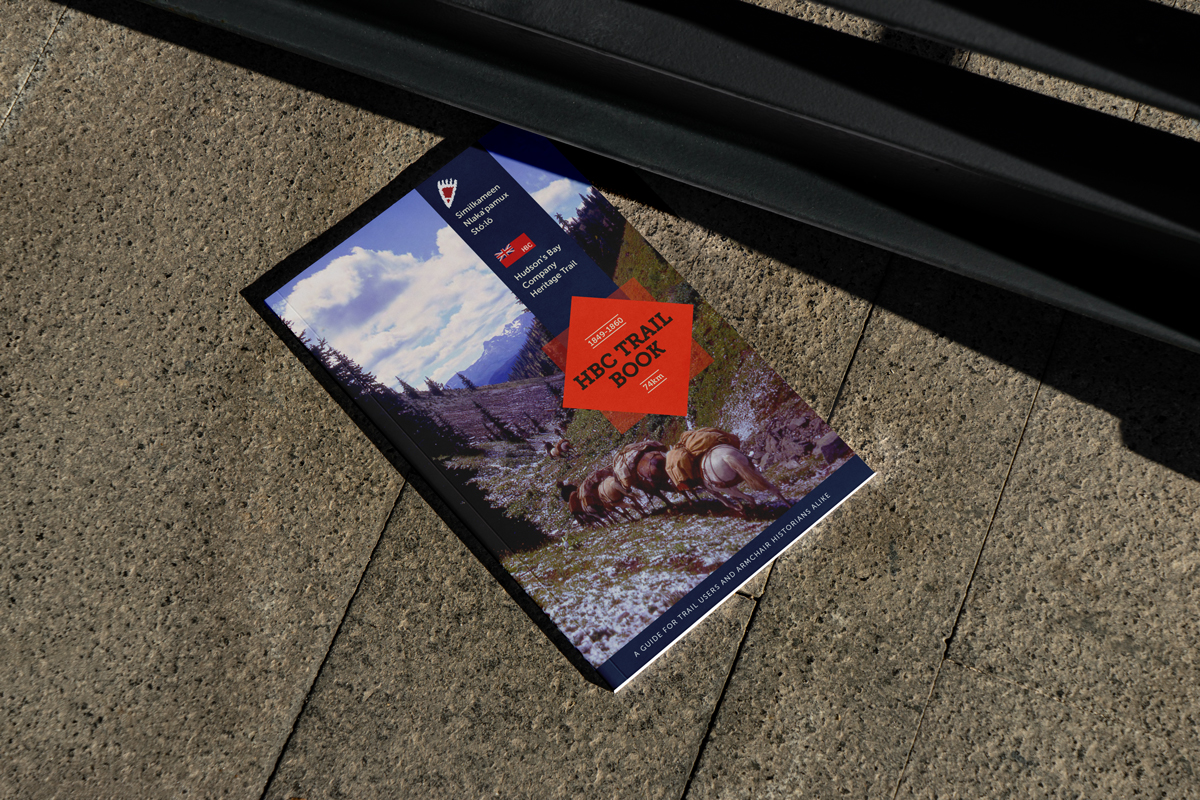
For the Hope Mountain Centre for Outdoor Learning, we designed an 80-page trail guide for the historic HBC Brigade Trail—part practical navigation tool and part historical storytelling, blending trail data with the stories of the First Nations guides and fur traders who first walked the route. It's now in its second printing, and it still does something a downloadable map never could: it comes with you into the woods where data might not always be available.
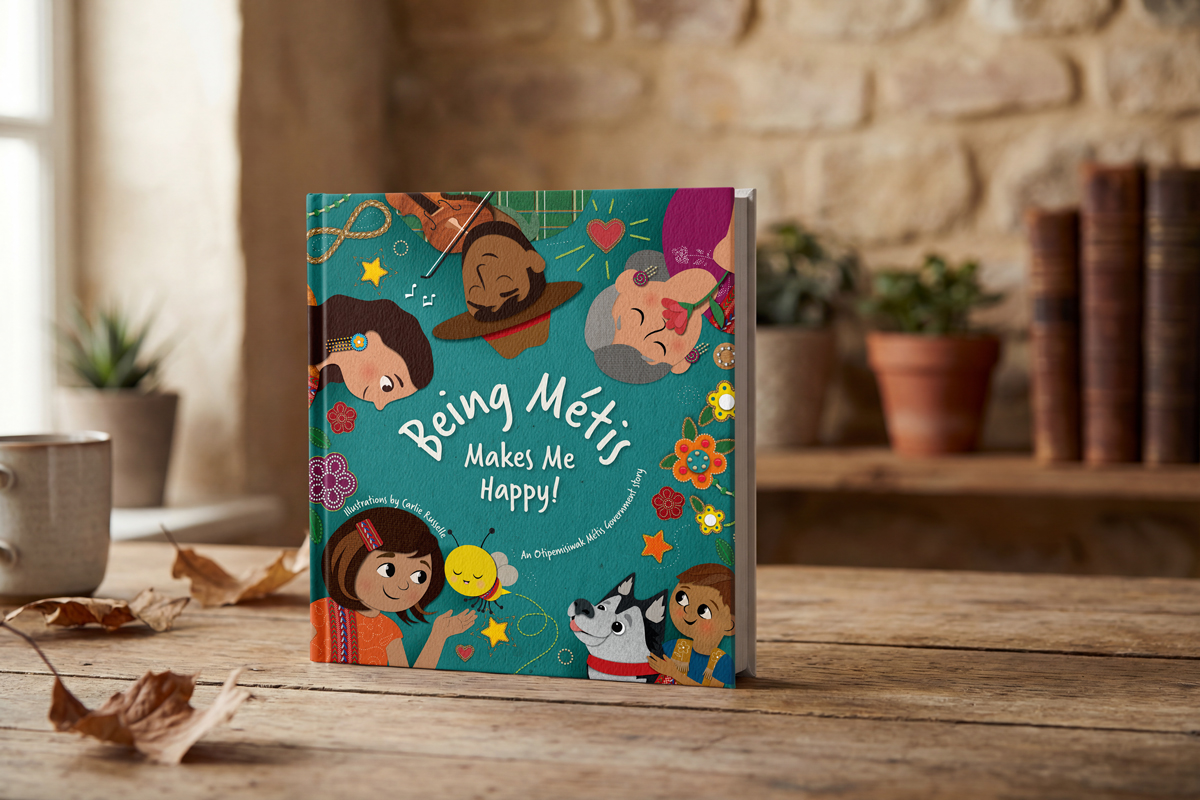
For the Otipemisiwak Métis Government, we illustrated Being Métis Makes Me Happy, a children's book that went on to win Gold at the Vega Illustration Awards. A story like that isn't meant to be scrolled through—it's meant to be read aloud, page by page, by a parent or a grandparent.
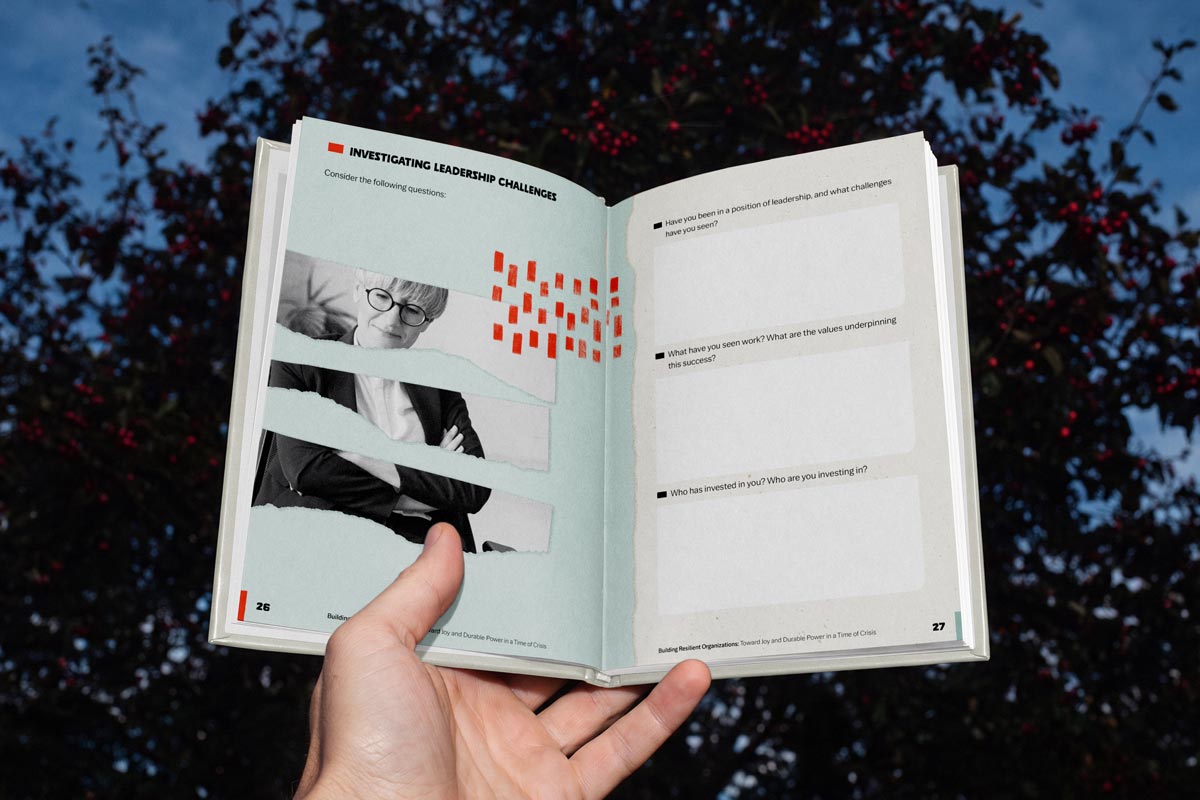
And for Rockwood Leadership Institute, we turned a dense political essay on organizational resilience into a zine-style workbook, complete with speech bubbles and space to write in the margins. It went on to win the Design MasterPrize, and it's now used by organizations from Canada to Brazil—because people can mark up, carry a workbook into a meeting, and look at it with others. A PDF sitting in a shared drive doesn't offer the same tactile, communal opportunity.
Guides, books, workbooks, magazines, impact reports … Different formats, same underlying idea. Print isn't a fallback for when digital doesn't fit. It's a deliberate choice, made project by project, based on what the story actually needs.
If you're weighing whether your next report, guide, or resource should be print, digital, or both, we'd love to talk it through with you. Every project starts with the same question, and the answer depends on a clear understanding of your organization, your audience, your goals, and your ideal outcomes. So we read everything first, figure out what your audience actually needs, and build the right format around that, not just whatever's trendy this year.
Get in touch about your next project.